No-Joke Killer Punch Line
Tuesday, August 31st, 2010
Category: Just Plain War, Madness, War & Politics
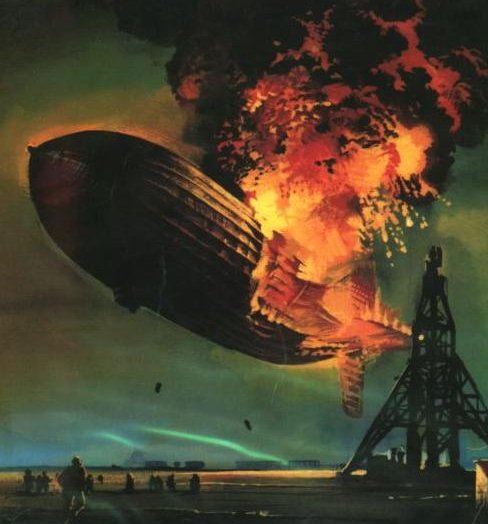
Tonight President Obama is reportedly set to go on national TV and proclaim the end to the Iraqi war, of course, without using the infamous phrase, “mission accomplished” — a tightrope walk between half-truth and full-blown lie.
And the peace president will also not mention the other war zone, Afghanistan, where it’s been a nightmare for US GIs — four more died today, bringing the the total to 16 killed since last Friday.
The end to hostilities my ass.
(Illustration found here).
Jeff Huber, one of my most favorite war commentators, has a piece this morning on Obama’s plea for everyone to understand how the Iraqi war has ended and the US has won — and so there.
Huber blogs at Pen and Sword, but this one was found at antiwar.com.
Money quote:
The entire planet knows Obama’s “fulfilled promise” to end the U.S. combat mission was an exercise in sleight-of-tongue Neo-speak, and all signs indicate that the December 2011 status of forces agreement (SOFA) deadline by which all U.S. troops are supposed to leave Iraq has already gone the way of the pay phone.
I’m also outta here! Mission unfounded!
Leave a CommentKrugman at 4 a.m.
Monday, August 30th, 2010
Category: Finance, Media, Musings
In keeping with the reality of early morning, it’s always a heart-touching, easy embrace to read Nobel Prize-winner and NYT columnist Paul Krugman, especially on Mondays — in a quiet, peaceful pre-dawn it’s hard to believe the USA and the world is going to shit in a wire basket.
A lot of folks don’t like the guy, he’s a Democrat, which puts him on the same bus with Hitler, book-burners, mass-killers, and ah, let’s see, maybe Satan.
I’ve always enjoyed his work, though, sometimes he gets a bit technical and one-sided, but overall he seems to see the holes in the fabric of economic policy and all its side issues.
He said early on Obama’s financial stimulus package was way-too small, and sure-enough, now everybody seems to agree much-more cash-up-front was required way-back 18 months ago.
This morning, Krugman’s column is about the horror of the coming mid-term elections and the extreme-near future.
There’s concern about a nasty-mouthed, right-wing saying whatever ugly thought comes to its mind, i.e., asshole, fat-cheeked, Rush Limbaugh’s recent “Imam Hussein Obama” bullshit:
To get a sense of how much it matters when people like Mr. Limbaugh talk like this, bear in mind that he’s an utterly mainstream figure within the Republican Party; bear in mind, too, that unless something changes the political dynamics, Republicans will soon control at least one house of Congress.
This is going to be very, very ugly.
Yes, most indeed.
Frank Rich, Krugman’s stable-mate at the NYT, also had a Sunday piece on right-wing bullshit.
Money quote at the end:
When wolves of Murdoch’s ingenuity and the Kochs’ stealth have been at the door of our democracy in the past, Democrats have fought back fiercely.
Franklin Roosevelt’s triumphant 1936 re-election campaign pummeled the Liberty League as a Republican ally eager to “squeeze the worker dry in his old age and cast him like an orange rind into the refuse pail.”
When John Kennedy’s patriotism was assailed by Birchers calling for impeachment, he gave a major speech denouncing their “crusades of suspicion.”
And Obama?
So far, sadly, this question answers itself.
And at 4 a.m. that’s a real ugly, sad reality.
Leave a CommentAin’t Goin’ Back
Saturday, August 14th, 2010
Category: Just Plain War
Soldiers are people, too.

(Illustration found here).
War fucks people up in more ways than maybe 200.
Fighting with the US military nowadays is a 24/7/365 ordeal — none of this back in (the) world Vietnam bullshit describing being in country and anywhere else, particularly hometown USA.
In the near-nine years since Sept. 11, 2001 (on-point since the original invasion of Afghanistan), people serving in grunt divisions of the US armed services have been shredded to pieces, especially the poor peoples in the Guard units — a weekend, non-serious-military, regular-guy-on-a-job, then in a few weeks, a frightful, ready-to-puke guy picking up body parts in Fallujah.
Some degree of soldier blowback should be expected from close to a decade of constant, horrifying, mind-bending warfare with the Iraq debacle (let’s not even go there in any detail, it would only make me puke anger onto my laptop, the damn thing is already in bad enough shape) decimating whatever there was of a US military.
Bringing home war-zone memories has become part-and-parcel of being a modern soldier: “…at 12 months following combat, the prevalence of mental health problems among veterans does not abate, and in many cases, increases.”
And killing oneself is a release from these mental health problems.
Last year, according to an in-depth US Army study released in July, 160 active duty soldiers took their lives in the 2009 fiscal year, putting the army suicide rate at a record 20.2 per 100,000, exceeding the national average of 19.2 for the first time.
Which in turn, concluded the study: “Simply stated, we are often more dangerous to ourselves than the enemy.”
And the problem isn’t just repeated deployments to horrible war zones, it’s also the very anticipation of going to battle as “79 percent of the soldiers who committed suicide had had only one deployment, or had not deployed at all.”
And those poor weekend warriors.
From McClatchy: Suicides among Army and Air National Guard and Reserve troops have spiked this year, and the military is at a loss to explain why. Sixty-five members of the Guard and Reserve took their own lives during the first six months of 2010, compared with 42 for the same period in 2009. The grim tally is further evidence that suicides continue to plague the military even though it’s stepped up prevention efforts through counseling and mental health awareness programs.
If soldiers aren’t killing themselves, they’re just not coming back to work.
Buried deep in the recent US Army report on military suicides is a eye-opener about the status of ordinary service people.
Via HuffPost:
Since 2004, the number of soldiers going AWOL, deserting, and “missing movement” — that is failing to deploy when they’re supposed to — has gone up a shocking 234 percent.
The Army includes this fact on page 92 of the 350 page document, in a section on misdemeanor crimes — alongside motor vehicle violations, substance abuse, and other crimes — which collectively have been rising at the rate of more than 5,000 a year for the last five years.
“Good order and discipline are on the decline,” the report says.
The big, real-vital difference, of course, between Vietnam and the US continual wars nowadays is the absence of any kind of military draft — which in itself would not have allowed George Jr. and The Dick to turn whole countries to slaughter houses, not for long anyway, as there would have been a major uproar.
The US did have 500,000 troops in Vietnam, though, but still couldn’t get the war together, and that’s horribly creepy.
Riots and all kinds of animated public displays, Walter Cronkite, a ton of stuff quickly made the Vietnam war a no-win situation and every asshole knew it.
The US is into war, apparently just for the damn sake of war.
A recent instance: The US is currently putting together a $60 billion military-hardware deal with Saudi Arabia, a deal festered first by George Jr. and then aided and abetted by Obama, a package which includes F-15 fighter aircraft and Black Hawk helicopters.
Israel should have been worried, but they’re getting a deal, too — the Saudi F-15s won’t carry long-range offensive gear.
What does it matter, though, because the US is dealing with both sides.
The chief bit from the WSJ’s piece on the arms deal:
The Saudi deal could increase pressure on Israel to quickly commit to buying the F-35, also known as the Joint Strike Fighter, which Lockheed Martin Corp. could start delivering as early as 2015, around the same time the Saudis would begin to get new F-15s.
How can US GIs be absent without leave in wars conducted with an absence of humanity and sense.
1 CommentSweet in the Chaos of Sour
Thursday, August 12th, 2010
Category: Cloud gazing
In the daily grind — it’s early AM in California again — there’s some notice of just how sweet little things can be, something to slow the sliver of wood-fragment-splinter of bad shit covering the news of the world.
I’ve sent this to a couple of my children — one posted it on her Facebook page.
Watch and weep with joy here.
And for another one, even more sweet, yet with a touch of hilarious, check this out.
Have a WTF day.
Leave a CommentInsomniac
Wednesday, August 11th, 2010
Category: Musings, Scratching Sounds
Early here on California’s north coast — 4:15 a.m. to be exact — and with Yerba Mate cursing through the veins, the world looks cleaner and nicer without all the pompous sound from a shitload of awake peoples.
Sound and sight is more clear this time of day, as if the misery and wretchedness was faraway and long ago.
Not! A bitch fit does work, sometimes.
A push and a shove with the words of the morning (and day): Steve Slater, the JetBlue flight attendant who melted down Monday after a fight with a passenger, has turned into a kind of freakish folk hero: By early Tuesday afternoon, more than 20,000 people had declared themselves supporters of Slater on Facebook, and the number was growing by thousands every hour. At least one fan set up a legal fund on his behalf.
And a friend told a giant gaggle of reporters and photogs after the press became too great: “Leave, leave leave.”
Yes and good morning.
Leave a CommentVats of Fire And Rain — ‘Extreme Events’
Tuesday, August 10th, 2010
Category: Cloud gazing, Environment, Weather
The future cooks while humanity cries through the looking glass:
As the climate warms, we expect heat waves to become more frequent (Ganguly et al., 2009).
Now there is still considerable uncertainty on where the heat waves will occur, that seems to depend on the climate model used.
However, the physics of heat waves do not change.
Heat waves in climate simulations are still associated with upper-level ridges (Meehl and Tebauldi, 2004).
This suggests that we will likely see more heat waves like the Muscovite heat wave of 2010 in the future.

(Illustration found here).
The Russians have been feeling the gosh-awful blowback of one reality aspect in the environment’s “new normal” — great waterless heat.
Watch here a fascinating, though highly-disturbing report by CNN iReporter Percy von Lipinski in Moscow, a three-minute clip aptly described as a walk through a “cauldron of hell.” (and the word, ‘cauldron‘ — A large vessel, such as a kettle or vat, used for boiling; a state or situation of great distress or unrest felt to resemble a boiling kettle or vat).
Percy described the sun as a “barely visible dot of orange trying to light the sky.”
The Russian capitol has been consumed by smoke from more than 560 forest/brush/wood-of-any-type-fires burning across the central belly of the country, end results of a heatwave/drought never before seen there; and for the Muscovites, they’re also dealing with peat bog fires — there’s 39 such horrors right now with 27 of them around Moscow — and temperatures near 104F, something also beyond any alive or dead memories.
Check out a dangerous-looking view from the NASA MODIS satellite of the Russian fires at Climate Central.
And although officials downplayed the peril, those fires are also threatening nuclear contamination from the Chernobyl disaster found in forests throughout certain areas of Russia, Ukraine and Belarus.
According to AFP, Philippe Renaud, head of the environmental radiation laboratory at France’s IRSN nuclear safety institute, said “If these trees burn, the cesium would be released into the air where they could be breathed in by people and with the wind even end up in France,” and then reportedly muttered some all-time famous last words: “This isn’t dangerous at all.”
Global climate mutation at work.
According to Dr. Jeff Masters, the Moscow mess is a combo of weather events, creating one of those heinous positive feedback loops: “As a result, soil moisture in some portions of European Russia has dropped to levels one would expect only once every 500 years.”
And from the soil comes food.
The current inferno has already destroyed 20 percent of Russia’s wheat crop, causing Prime Minister Vladimir Putin to ban all grain exports for the rest of the year, a good, judicious move for Russkies, but shit for the rest of the world.
Weather-induced shortages in the international grain market had already driven the price of wheat up by more than 80 percent since early June, but Russia, fourth-largest grain exporter, in its move immediately forced another eight percent jump.
Gwynne Dyer, the historian/journalist, notes the Russian wheat ban won’t raise much alarm to most of the world this particular time, but the event does reveal an early glimpse of climate change impact:
This means that food prices will also rise, but that is a minor nuisance for most consumers in the developed countries, since they spend only about 10 percent of their income on food.
In poor countries, where people spend up to half their income on food, the higher prices will mean that the poorest of the poor cannot afford to feed their children properly.
As a result, some will die — probably a hundred or a thousand times as many as the 30-odd Russians who have been killed by the flames and the smoke.
But they will die quietly, one by one, in under-reported parts of the world, so nobody will notice.
Not this time.
But when food exports are severely reduced or banned by several major producers at once and the international grain market freezes up, everybody will notice.
…
The world grain reserve, which was 150 days of eating for everybody on the planet 10 years ago, has fallen to little more than a third of that.
(The “world grain reserve” is not a mountain of grain somewhere, but the sum of all the grain from previous harvests that is still stored in various places just before the next big Northern Hemisphere harvest comes in.)
We now have a smaller grain reserve globally than a prudent civilization in Mesopotamia or Egypt would have aimed for 3,000 years ago.
Demand is growing not just because there are more people, but because there are more people rich enough to put more meat into their diet. So things are very tight even before climate change hits hard.
The second problem is, of course, global warming.
The rule of thumb is that with every one-degree C rise in average global temperature, we lose 10 percent of global food production.
In some places, the crops will be damaged by drought; in others by much hotter temperatures.
Or, as in Russia’s case today, by both.
And then again, maybe not-so-early a glimpse: As one can see, the Russkies ain’t alone in the wide, wide world.

(Illustration found here).
Summer in the US this year isn’t exactly another from Russia with hot-love, but records have been snapped across the eastern/southern part of the country as peoples sweated, sweltered and then stank in a heat wave where there’s no real relief.
Last month, evening TV newscasts seemingly always led with clips depicting all kinds of different peoples in big eastern US cities, playing in hydrants, wiping brows, boiling — followed by shots of the BP disaster, of course — and after some weather-related details, gushered forth with tons of human-interest stories, which got real-old, real-quick.
Read some stats on broken temp records across the US at CapitalClimate, and note the personal insert by the writer: “It’s still 90° in Washington at 7 pm.”
After a weekend of somewhat a respite from the heat, temperatures across the south are expected back to the brutal level by this week.
Here on California’s north coast, this has been a very-cool, and very-sun-less summer — ain’t weather odd.
Via Google Earth, it appears that directly straight-east (2,286 miles and nearly five hours by air) from Moscow is Islamabad, Pakistan, the capital of a country awash literally in a direct-opposite disaster — heavy rains and massive flooding on an unprecedented scale, even where bad shit happens apparently all the time.
Via CNN: “Pakistan has been hit by the worst flood of its history,” Prime Minister Yousuf Raza Gilani said in a televised speech Friday. “As I speak, the flood is still engulfing new areas and adding to the scale of devastation.”
The regional to national disaster has killed 1,600 and more heavy rain is currently falling, creating bad-case scenarios for millions of people — waters have reached the tip of the “food basket of Pakistan” 1.4 million acres of agricultural land has already been flooded.
(Illustration found here).
And east of acid-smoked Moscow there’s plenty of water.
Massive rain created flashing flooding the last few days in Poland, Germany and the Czech Republic, killing at least 15 people: A Polish firefighter said the scene in Bogatynia, in southwestern Poland, was “apocalyptic.” Much of the town of 20,000 was flooded when the Miedzianka River crested, killing one victim, he said.
The damage done already will be counted in millions and millions of dollars, and although rains eased over the weekend, peoples will be digging out for weeks — worse flooding in a hundreds of years.
Meanwhile, back on Red Square, Alexander Frolov, head of the Russian Meteorological Center, waxed dramatic on Monday:
“We have an ‘archive’ of abnormal weather situations stretching over a thousand years.
It is possible to say there was nothing similar to this on the territory of Russia during the last one thousand years in regard to the heat.”
Dramatic, indeed.
Climate change is most-likely the big one, the ultimate game changer, and from all the indicators already here and might be a-coming faster than originally anticipated – sequence of “the actual trajectory” of global warming is quicker, faster.
A perfect storm of mad, dangerous shit, going off at linked hyper-irregular intervals — what science people call “extreme weather events.”
Jean-Pascal van Ypersele, a vice president of the UN’s IPCC, on these remarkable occurrences and how these disasters are consistent with what’s happening with mankind-caused climate change: “These are events which reproduce and intensify in a climate disturbed by greenhouse gas pollution,” he said. “Extreme events are one of the ways in which climatic changes become dramatically visible.”
And it’s going to get worse and worse, quicker and quicker.
What’s a body to do?
Actually fly away.
One of the earth’s supposedly great brainiacs, astrophysicist Stephen Hawking, says if humanity hopes to survive we must leave the earth or face extinction: “It will be difficult enough to avoid disaster in the next hundred years, let alone the next thousand or million,” Hawking said. “Our only chance of long-term survival is not to remain inward-looking on planet Earth, but to spread out into space.”
Not until it stops raining.
1 CommentWeather as Climate
Monday, August 2nd, 2010
Category: Cloud gazing, Environment, Weather
New book out Tuesday on weather and climate change.
Heidi Cullen, The Weather Channel‘s on-air climate specialist, is the author of The Weather of the Future: Heat Waves, Extreme Storms, and Other Scenes from a Climate-Changed Planet, in which local conditions are the up-close and personal of what is occurring with the planet.
AP has a review/look-see.
Money quote:
“Most Americans believe that we will not take steps to fix climate change until after it has begun to harm us personally,” she writes.
“Unfortunately, by that point it will be too late. The climate system has time lags. … So, by the time you see it in the weather on a daily basis, it’s too late to fix …”
Yes…as right now the Russians, the Chinese, the Pakistanis, along with other peoples in other parts of the globe are experiencing first-hand, a hands-on primer for climate change.
(h/t: theoildrum)
Read an asshole version/review of Cullen’s book here and see a good example of why the good, green earth and all its peoples are screwed.
1 CommentEarth Under the Weather
Sunday, August 1st, 2010
Category: Cloud gazing, Environment, Scratching Sounds, Weather
As this summer carves its way through the year, any dumb-ass can see something fishy is going on with the planet’s weather systems, like an old, old radiator busting its seams — heat and more heat.
Global warming might be beyond the “tipping point.”

(Illustration found here).
Climate change has always been a serious subject here at Compatible Creatures, a topic seemingly even more horrifying, and scarer, than even stuff like war, the Great Depression, rectal cancer, or John McCain, and carrying with it this unfurling scenario which now can be readily seen by anyone with any kind of walking-around sense — unless you’re in the ilk of Jim Inhofe or any of his kin.
Just in the last three years, from all indications, the environment in which humanity dwells appears to be accelerating much-quicker than anticipated toward some type of near-unlivable condition as witnessed this past week with a report, titled “State of the Climate 2009,” from US National Oceanic and Atmospheric Administration: “When we follow decade-to-decade trends using multiple data sets and independent analyses from around the world, we see clear and unmistakable signs of a warming world,” says Peter Stott, a climate scientists with the UK’s Hadley Centre for Climate Prediction and Research.
Less than a year ago, The Climate Change Science Compendium 2009 reported blowbacks within climate change were moving faster, and quicker than anticipated:
In addition, increased absorption of the main greenhouse gas carbon dioxide by oceans is leading to acidification of seawater faster than expected.
For example, water that can corrode a seashell-making substance is “already welling up along the California coast — decades earlier than existing models predict,” the report said.
Climate change is not THE can to kick further down the road for future generations to deal with, like oil, for instance, which apparently will keep the planet machined-in up for a little while longer, or maybe peak oil is another worm in the apple in the eye of mankind — President Obama was in Detroit on Friday to relish in the financial uptick of US auto makers, never mind the coming years; instead of bailing out the car makers last year, Obama should have started the process to “phase” them out, but that’s too much to ask, huh?
Well, the assholes in the US Congress couldn’t get a climate bill passed this year, despite everything.
The problem, though, was priority — it was either health care or climate change.
And one must remember this about climate change: The situation will soon become horrifyingly and depressingly mega-obvious.
Two years ago in Copenhagen, Denmark:
Recent observations confirm that, given high rates of observed emissions, the worst-case IPCC scenario trajectories (or even worse) are being realised.
For many key parameters, the climate system is already moving beyond the patterns of natural variability within which our society and economy have developed and thrived.
These parameters include global mean surface temperature, sea-level rise, ocean and ice sheet dynamics, ocean acidification, and extreme climatic events.
There is a significant risk that many of the trends will accelerate, leading to an increasing risk of abrupt or irreversible climatic shifts.
Now, financial and health care reform are indeed needed, but next to climate change, neither can hold a waxing candle.
2 CommentsNo Cluster Conscience
Saturday, July 31st, 2010
Category: Environment, Just Plain War, War & Politics
The horror of these things — cluster bombs.
Sunday, Aug. 1, marks beginning of an international ban on those terrible weapons — Cluster munitions explode in mid-air to release dozens — sometimes hundreds — of smaller “bomblets” across large areas. Because the final location of these scattered smaller bombs is difficult to control, they can cause large numbers of civilian casualties — and a treaty in which the US still has not recognized.
(Illustration found here).
In the the not-so-distant past, cluster bombs have been used in Cambodia, Kosovo, Afghanistan and Lebanon.
The Convention on Cluster Munitions started in February 1997, in which 46 nations issued the “Oslo Declaration,” and a final draft of the treaty was adopted in May 2008 at a meeting in Dublin, Ireland.
One hundred seven nations, including seven of 14 countries that have used cluster bombs and 17 of the 34 countries that have produced them signed the original document — which prohibits the use, production and transfer of cluster munitions and obliges those that have ratified to destroy stockpiles.
Some nasty, dumb-ass countries have steered clear of the treaty: China, Russia, India, Israel, Pakistan, Brazil and, of course, the good-ole US of A.
Two years ago, at the offset of the ban process, the US Pentagon declared: “While the United States shares the humanitarian concerns of those in Dublin, cluster munitions have demonstrated military utility, and their elimination from US stockpiles would put the lives of our soldiers and those of our coalition partners at risk.”
Bullshit — U.S. field artillery used them on the ground in Iraq, and a shitload is still hanging about.
From a USATODAY investigative piece in December 2003:
The Pentagon presented a misleading picture during the war of the extent to which cluster weapons were being used and of the civilian casualties they were causing.
Gen. Richard Myers, chairman of the Joint Chiefs of Staff, told reporters on April 25, six days before President Bush declared major combat operations over, that the United States had used 1,500 cluster weapons and caused one civilian casualty.
It turns out he was referring only to cluster weapons dropped from the air, not those fired by U.S. ground forces.
In fact, the United States used 10,782 cluster weapons, according to the declassified executive summary of a report compiled by U.S. Central Command, which oversaw military operations in Iraq.
Centcom sent the figures to the Joint Chiefs in response to queries from USA TODAY and others, but details of the report remain secret.
No wonder the Pentagon hates-to-loathing entities like WikiLeaks.
The US has a shameful history with those weapons: In Vietnam, between 1964 and 1973, more than 2 million tons of explosive ordnance, including an estimated 260 million cluster munitions were deployed, and with reportedly about a 30 percent failure rate, leaves about two-thirds of the country still mega-dangerous.
Although President Obama signed an export moratorium on the weapons last year, and the US military claims it won’t use cluster munitions with a failure rate of more than one percent (yip-pee) by the end of 2018 — eight frickin’ years from now.
How long does it take to figure this shit out?
Even the nit-wit, corrupt president of Afghanistan, Hamid Karzai, signed the ban in December 2008, and supposedly the US hasn’t used cluster bombs since 2003, but this is, of course, the weapon that just won’t stop killing.
In southern Lebanon, where a quick-brutal conflict took place in 2006, the area is still triggered by all the unspent munitions that’s literally been spread across the countryside.
Cluster bombs still contaminate roughly 80 percent of the farm land and the forests. The bombs lurk underground, in between rocks, in waste pipes, on trees or in dry stone walls. They are everywhere, spread all over the place.
The Israeli army used munitions that were 35 years old, says Mohamed Scheikh from the center for minesweeping with the Lebanese army.
“Therefore the number of duds is very high. In some areas it’s 100 percent — none of the discharged bombs exploded right away,” he explains. “43.6 square kilometers (16.8 square miles) in Southern Lebanon were affected. So far, we’ve managed to clean up half of it already.”
Cluster bombs are malicious weapons.
They do not have a due date: “They are always ready to explode. And the longer they remain underground, the more sensitive and dangerous they get. Due to heavy rain and torrents they change their position,” he says.
Obama should do more — his whole gig is change — and sign the ban on these terrible, senseless and civilian-killing weapons.
And sure as shit not wait until 20-freakin’-18 to do something.
Out Drankin’
Friday, July 30th, 2010
Category: Cloud gazing, Musings
As the economy tanks, people seem to be drinking their financial problems away, as research indicates more US peoples are hitting the bottle, with more white guys getting bombed than any other ethnic group.
Free, white and drunk:
Whites are more likely than blacks and Hispanics to get drunk. Twenty percent of white men drank to intoxication at least once a month, compared with just 13 percent of black men.
In Gallup poll released Friday, 67 percent of US adults claim to down at least one alcoholic beverage on occasion, the highest level in 15 years — and 72 percent of the those aged 18-to-54 appreciated alcohol.
(Illustration found here).
Income also apparently has played a factor in bellying up to the bar.
Gallup’s poll reported 81 percent of people making $75,000 a year enjoyed booze, but only 46 percent of those making less than $20,000 said they drank — no credit.
In order to survive in an employment environment where there’s five people after one job opening, booze, weed and just-plain bad behavior becomes the “new normal” for daily life.
The bubble-bursting of the American Dream alters perception, finances shift and life get’s a bit dicey:
“I’m seeing an increase in bad lifestyle choices,” confirms Jonathan Alpert, a New York psychotherapist and relationship columnist.
“People are staying up until the wee hours of the morning, there’s an increase in smoking, drinking and sexual behaviors like surfing porn and using hookers.”
…
People are also shoplifting more.
According to the Global Retail Theft Barometer study, stealing has risen 6% during the past year. Retailers attribute the increase in five-fingered discounting to the soured economy because of the items being pocketed–fresh meat, for instance, is a particular favorite.
As someone involved in retail liquor sales, it’s the economy, dumb-ass, and drink up!
1 CommentBanging the War Bong
Thursday, July 29th, 2010
Category: Just Plain War, history
Even as thousands of documents reveal a beyond-quagmire US entanglement in Afghanistan, the core entity of any kind of peace or accord in the war — Afghan police and soldiers — is a nothing more than a deadly, brutal joke.
A joke, however, without a punchline.
Check this video from Aljazeera English as a couple of Afghan police hit a big, smoking bong before joining troops of the US 82nd Airborne for a patrol; first one guy tokes up, and then the other, choking and off to war, Soviet rifles straped across their shoulders — without the backstory and hardware, the scene could be of a couple of dudes getting ready to party.
Says Sgt. Ryan Gloyer on loaded local cops:
“In the past we’ve had some issues with some ANSF (Afghan National Security Forces), getting high on patrol.
I wouldn’t say I feel threatened, they just act silly.
Like anybody who smokes weed, they act ridiculous, hard to get them to focus, they won’t stay quiet, just got the giggles.
It’s pretty difficult.”
The video was filmed by members of the 82nd Airborne, and according to Aljazeera’s The Asia Blog: “I hope a million people see it,” said one, who understood the twisted hilarity of it all.
A wide audience did get a view: Jon Stewart on the Daily Show played a small portion of the video — the most meaningful portion– at the end of a routine Wednesday night. See it here.
A ‘twisted hilarity’ coated in extreme-black humor.
The documents from WikiLeaks made public last weekend reveals this little problem with the Afghan police and army is, in the parlayed words of Joe Biden, ‘one fuckin’ big deal.’
From a New York Times analysis of the documents:
The reports paint a disheartening picture of the Afghan police and soldiers at the center of the American exit strategy.
The Pentagon is spending billions to train the Afghan forces to secure the country.
But the police have proved to be an especially risky investment and are often described as distrusted, even loathed, by Afghan civilians.
The reports recount episodes of police brutality, corruption petty and large, extortion and kidnapping.
Some police officers defect to the Taliban.
Others are accused of collaborating with insurgents, arms smugglers and highway bandits.
Afghan police officers defect with trucks or weapons, items captured during successful ambushes or raids.
Drugs, too.
And it ain’t just tokin’ a bong, but some scary shit.
From CNN:
Illegal drugs appear in several other instances to have fueled much of the internal Afghan disputes.
In March 2009, a gunfight broke out after “a significant proportion” of Afghan Border Police at a patrol base were “high on opium and having a party.”
The shooting left at least one person dead. The stoned police officers apparently had an argument with an Afghan interpreter at his temporary quarters.
Shots were fired, leaving one policeman dead. British forces were “alerted and arrived on the scene to deal with the incident and treat the casualty.”
It was unclear who fired the fatal shot.
There is only one real option.
Exit stage right now.
The WikiLeaks documents were first furnished in the US to the New York Times, in the UK to The Guardian, and in Germany, Der Spiegel.
The Germans took it to heart.
From Spiegel Online:
The German government, NATO and the West shouldn’t wait that long.
Together they should realize — and admit — that the war in Afghanistan is not going to end in success.
We have failed. The war has been lost.
The country that we leave behind will not be pacified. It is possible that we could have been successful had we understood earlier how the country works.
But now, we are no longer a part of the solution — increasingly, we have become part of the problem. It is best just to leave now, before additional blood is spilled.
The secret war logs given by WikiLeaks to SPIEGEL confirm as much.
Sorry to say, however, that stoned dog won’t hunt.
1 CommentFriends
Wednesday, July 28th, 2010
Category: Cloud gazing, Musings
Lack of friendship is supposedly worse on your well being than a Quadruple Bypass Burger from the Heart Attack Grill.
From Reuters on a report released Tuesday by a research team at Brigham Young University:
Having good social relationships — friends, marriage or children — may be every bit as important to a healthy lifespan as quitting smoking, losing weight or taking certain medications…
…
“A lack of social relationships was equivalent to smoking up to 15 cigarettes a day,” psychologist Julianne Holt-Lunstad, who led the study, said in a telephone interview.
Her team conducted a meta-analysis of studies that examine social relationships and their effects on health. They looked at 148 studies that covered more than 308,000 people for their analysis, published in the Public Library of Science journal PLoS Medicine at http://www.plosmedicine.org.
…
Having low levels of social interaction was equivalent to being an alcoholic, was more harmful than not exercising and was twice as harmful as obesity.
Social relationships had a bigger impact on premature death than getting an adult vaccine to prevent pneumonia, than taking drugs for high blood pressure and far more important than exposure to air pollution, they found.
Yet, the techno-irony:
Her team found some troubling evidence that Americans are becoming more isolated, and thus losing the support and care that love and friendship provide.
“For instance, trends reveal reduced intergenerational living, greater social mobility, delayed marriage, dual-career families, increased single-residence households, and increased age-related disabilities,” they wrote.
“More specifically, over the last two decades there has been a three-fold increase in the number of Americans who report having no confidant,” they added.
“Such findings suggest that despite increases in technology and globalization that would presumably foster social connections, people are becoming increasingly more socially isolated.”
Modern life seems in itself, a “feedback loop,” which creates or makes an environment or a situation far-even worse, as there’s more communication but far less friendship.
So, if you always dine alone on a menu of burgers and fries, you’re one screwed puppy.
keep looking »