Asleep at the Pump
Filed Under Economy, Energy, Environment, Technology | Leave a Comment
After a visit to the laundromat this morning, I put another $20 worth of gas in the old, problem-plagued Jeep, wincing (both the Jeep and I) at a pump price of $3.99 a gallon for regular — up more than a dime since the last time.
And apparently based on the so-called favorable employment report released Friday, U.S. sweet crude increased by $1.48 to end the week at $97.84 per barrel, while Brent picked up $2.51 to finish at $114.58 per barrel.
Gas-pump prices appear erratic, depending where ye be: Statewide average in California is $3.73 a gallon for regular, up 3.7 cents in a week, but meanwhile, a good friend of mine residing less than two hours south of me recently paid $4.19 a gallon — Sup with that?
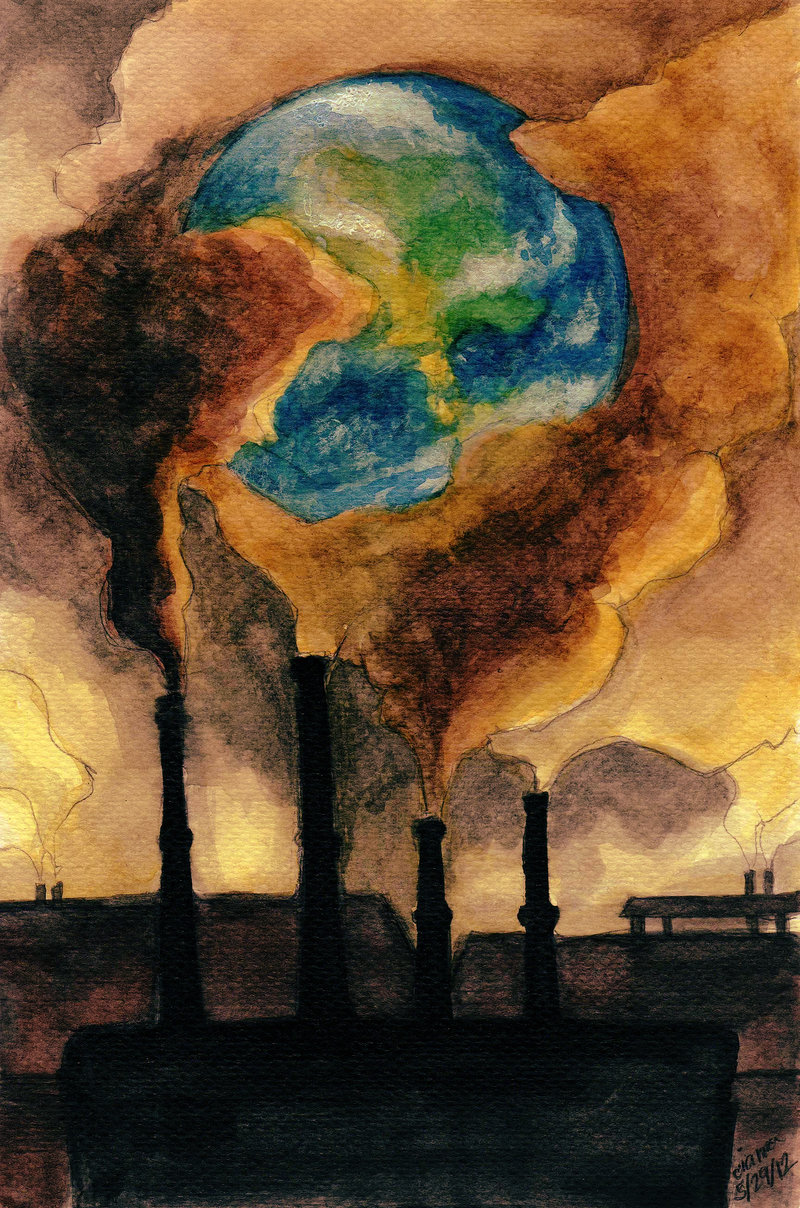
(Illustration found here).
Maybe we should take the plunge already and go Eurozone — $10-a-gallon gas would force stiff-necked US peoples to alter lifestyles and move on before the whole thing becomes reality.
New fuel for old vehicles — there’s about 240.5 million cars and light trucks cruising US highways and the average age of those vehicles rose to 10.8 years last year from 10.4 in the year before, due mainly to bad times in Detroit and the economy.
Apparently from indications beyond a recession, US peoples have been easing off the private vehicle for awhile now.
Via AlterNet two years ago:
Among the trends that are keeping sales well below the annual figure of 15-17 million that prevailed from 1994 through 2007 are market saturation, ongoing urbanization, economic uncertainty, oil insecurity, rising gasoline prices, frustration with traffic congestion, mounting concerns about climate change, and a declining interest in cars among young people.
Market saturation may be the dominant contributor to the peaking of the U.S. fleet.
The United States now has 246 million registered motor vehicles and 209 million licensed drivers — nearly 5 vehicles for every 4 drivers.
Kids and cars:
Perhaps the most fundamental social trend affecting the future of the automobile is the declining interest in cars among young people.
For those who grew up a half-century ago in a country that was still heavily rural, getting a driver’s license and a car or a pickup was a rite of passage.
Getting other teenagers into a car and driving around was a popular pastime.
In contrast, many of today’s young people living in a more urban society learn to live without cars.
They socialize on the Internet and on smart phones, not in cars.
Many do not even bother to get a driver’s license.
This helps explain why, despite the largest U.S. teenage population ever, the number of teenagers with licenses, which peaked at 12 million in 1978, is now under 10 million.
If this trend continues, the number of potential young car-buyers will continue to decline.
Plus these kids now are also faced with an incredible financial burden, not only with a humongous student-loan debt, but a bleak employment picture (despite Friday’s numbers) — unless one is an oil/gas person (corporations are people).
Maybe a bit of inequality right there: Exxon’s $41.1 billion in 2011 profit translates into nearly $5 million in profit every hour, or more than $1,300 every second. The annual profit comes near the record revenues of $46.23 billion in 2008…Between 2008-2010, Exxon Mobil registered an average 17.6 percent federal effective corporate tax rate, while the average American paid a higher rate of 20.4 percent.
Maybe venture into the ugly-oddness of fuel:
Gasoline prices are higher at the beginning of 2012 than at the beginning of any previous year ever — even at the beginning of 2008, a year when the national average for a gallon of regular unleaded gasoline reached a record $4.114 on July 7.
In its Daily Fuel Gauge Report, AAA Texas noted Friday a national average of $3.467 for a gallon of regular unleaded gasoline — up from $3.455 a day ago, $3.389 a week ago, $3.288 a month ago and $3.116 a year ago.
“We’re seeing the highest gasoline prices that we’ve seen,” Sarah Schimmer of AAA Texas said Friday.
“2011 was a record year, and in 2012 we’re definitely seeing higher prices.”
And all this for mobility, not only just for driving my Jeep around town, but oil/gas framed within the way-big picture of how the existence of an entire civilization depends on the black, bubbly shit — no way yesteryear can continue into the nowadays.
In reality, peak oil is actually the end of easy oil, low prices at the pump and so forth, and this peak supposedly occurred worldwide in about 2005 — so we’re already on the downside.
One interesting look at future possibilities comes from “Fleeing Vesuvius: Overcoming the Risks of Economic and Environmental Collapse,” a collection of essays from economists, environmental scientists, a couple of architects and even a corporate lawyer on the premise of how close we are to being totally f*cked.
From a review by Stuart Jeanne Bramhall of Fleeing Vesuvius and posted Friday at DissidentVoice:
The title refers to the volcano that destroyed Pompeii in 79 AD, specifically the large number of residents who failed to save themselves, despite weeks of earthquakes, gaseous clouds and other obvious signs that an eruption was imminent.
For more than a decade, a growing body of evidence suggests that the planet is on the verge of economic and ecological collapse.
Yet the vast majority of us do absolutely nothing to prepare for the stark conditions ahead.
…
All (the essay writers) are in basic agreement around the book’s central premise: the industrialized world needs to urgently downsize its energy use, both to stave off catastrophic climate change and to conserve dwindling fossil fuels.
In his Introduction, “Where We Went Wrong,” the late Irish economist Richard Douthwaite points out that one barrel of oil provides the equivalent labor of a man working forty hours a week for twelve years.
He goes on to stress that before the advent of cheap fossil fuels, capitalism was impossible — an economy relying on human labor and animal power is too inefficient to support it.
By definition capitalism depends on capital accumulation, the production of an economic surplus that can be reinvested in new capital (property and machines) to expand production even further.
Producing a surplus of this size only became possible because of the vast amount of cheap (practically free) work performed by fossil fuel energy.
And Ms Bramhall also reveals a brightness from the essays, not all doom-n-gloom: The last five sections of the book focus on solutions, with inspiring examples of new approaches to land use, agriculture and industrial design from individuals, groups and communities who have begun the transition to a less energy-intensive lifestyle.
Inspiration needs to have already been popped — too much pie-in-the-sky without actual political reality.
One updated sample chapter of Fleeing Vesuvius can be found at The Oil Drum.
And another review of the essay collection can be found here.
A major snag in the optimism — the above-mentioned political reality.
So says Kumi Naidoo, head of the environmental group Greenpeace, who spoke Friday at the big-wig, pow-wow Munich Security Conference, and chimed a loud alarm.
Via Raw Story:
“The moment of history we are in can be described as a boiling point or a perfect storm,” he told the assembled gathering of world leaders, ministers, top brass and defence policy experts at the annual Munich gathering.
“We are seeing a convergence of multiple crises happening at the same time. A food crisis, climate crisis, poverty crisis … and then of course the financial crisis and a demographic crisis and a global governance democratic crisis,” he added.
“The bottom line is that too many of our leaders … are sleepwalking us into a crisis of epic proportion,” he claimed.
One of those doing the sleepwalking is US Secretary of State Hillary Clinton, who’s also in Munich, Germany, this weekend for the conference, but her schedule has no room for end-of-life-as-we-know-it antics fostered by environmental activists — Clinton will most-likely reminisce about “…what a key partner Europe is in the global security, economic, democracy promotion agenda that we have.”
Just wake ‘em later.
Pump Sump
Filed Under Cloud gazing, Energy, Environment | Leave a Comment
Yesterday after work, I put another $20 worth of gas in the old Jeep Comanche, now back up at $3.89 a gallon for regular — up three cents since the last time we visited the pump, less than a week ago.
And in line with the rest of the US, pump prices rose nearly 3.5 cents a gallon the last few days to a national average of $3.39 a gallon — in California a gallon now is $3.71, up 1.4 cents in a week.
The prices are nearly 30 cents higher than the same time last year.
A penny here, a penny there and soon you’ve have a pile of some real money.
(Illustration found here).
Crude is still gushing upward.
From liveoilprices: In London, Brent crude oil futures for March 2012 delivery was trading at $111.22 a barrel, 15.30 GMT today on the ICE Futures Exchange.
Meanwhile, WTI: US Light crude oil futures for March 2012 delivery was trading at $99.67 a barrel, 15.06 GMT today in trading on the NYMEX. The US oil contract is up 1.2 percent over this mornings opening price of $98 a barrel.
The shit with Iran is the bad bet at the pump.
The International Monetary Fund warns the planet:
The International Monetary Fund warned on Wednesday that global crude prices could rise as much as 30 percent if Iran halts oil exports as a result of U.S. and European Union sanctions.
If Iran halts exports to countries without offsets from other sources it would likely trigger an “initial” oil price jump of 20 to 30 percent, or about $20 to $30 a barrel, the IMF said in its first public comment on a possible Iranian oil supply disruption.
The IMF highlighted the risks of rising tensions over Iran sanctions in a note on Wednesday sent to deputies from G20 countries who met in Mexico City last week.
The price impact caused by a cut in Iranian exports could be exacerbated by below average oil stocks in many countries, the result of tight oil market conditions through much of last year, the IMF said.
And in this the old ‘peak oil’ ugly raises its head.
Via the New York Times:
In an opinion piece (paywall) released on Wednesday by the journal Nature, James Murray of the University of Washington and David King of the University of Oxford point out that global oil production appeared to hit a cap of about 75 million barrels a day in 2005.
Since then, they note, small supply bumps have caused big price gyrations, yet even when prices spike above $100 a barrel, supply appears incapable of rising to meet the demand.
The professors make only a glancing mention of the term “peak oil,” a widely promoted and widely attacked concept, but their argument resembles some of the less feverish versions of the peak oil case.
They essentially argue that oil supply now represents a large strategic risk to global economic growth, and that smart governments ought to be developing comprehensive plans and pushing hard to move their citizens into more efficient cars, onto public transit and so forth — a greener energy path that would also be good for the climate.
Even with all this mess at the gas pumps, there’s an underlying bullshit irony to it all.
Oil companies know the future is coming — via TreeHugger:
Utilities, the oil and gas industry, agricultural companies and insurers are building assumptions about rising temperatures and extreme weather events into their scenario planning.
This is what’s being called climate adaptation or climate preparedness.
The payoff from investing in adaptation could be substantial.
In 2011, insured losses in the U.S. from natural catastrophes, including tornadoes, floods and hurricanes, topped $105 billion, breaking the record of $101 billion set in 2005, the year of Hurricane Katrina, according to Munich Re, the world’s largest reinsurance firm.
Some of those losses had nothing to do with climate change, but others did.
Pump it down and dirty.
Disconcerting Circumstance
Filed Under Cloud gazing, Economy, Energy, Environment | Leave a Comment

(Illustration found here).
In the US today, apparently all collective eyes were glued to South Carolina where intelligence-deficit Republicans held their primary to select from among a short-list of bullshitters a warm body to run against President Obama this November.
And Newt Gingrich is now the man of the hour — a later laugh is always loudest.
From a late afternoon post at CNN: “Gingrich has been harder to kill than Rasputin,” Republican strategist and CNN contributor Alex Castellanos said Saturday. “He has been dead three times in this campaign, and … the guy keeps coming back.”
US politics for 2012 so far has Never-Ever witnessed such a handful of completely worthless and despicable characters — a line up of reasons why this country/world is f*cked.
A most-likely insurmountable obstacle is truth of priorities and sight.
And Newt is no friend of the environment — he’s goes where be Robert Dollar.
An entire US political party (there’s only two) is working way-hard to create calamity for the coming years — twisting knowledge like a pretzel, cherry-picking data and just out-and-out lying — which in turn morphed a most-important circumstance into a cultural/religious phenomenon.
Last week, the Washington Post‘s Michael Gerson positioned correctly: But however interesting this sociology may be, it has nothing to do with the science at issue. Even if all environmentalists were socialists and secularists and insufferable and partisan to the core, it would not alter the reality of the Earth’s temperature.
There it is — reality.
And a shit-biscuit reality for our kids.
What set me in this thought direction was a post at The Dish earlier today which included the writings of Thomas Paine and Edmund Burke, especially Burke, who was concerned that the ‘earlier’ generation made up of his own contemporaries ought not jeopardize the future of still later generations who had not yet been born by creating chaos and disorder.
And a further look at the US future via five trends, the biggest problem being the national debt.
Debt?
The US has one, and really only one problem, and it’s a humongous one (along with the entire freakin’ planet), and it ain’t financial.
The near-immediate by-and-by carries a most-disconcerting view like this quick clip found right here — a sight of the near-immediate past into the nowadays that casts a look at a future horror for all our offspring.
Another related contemplation comes from Dianne Monroe at Speaking Truth to Power — she portends this is an unique period in world history and “an amazing time to be alive.”
Some snippets:
If you are reading this, you are alive today, and that means you are part of this Great Unraveling/ Great Turning, or whatever name we choose to call it.
If you, like me, are middle aged or beyond, we have lived through the apex of a global empire now passed irrevocably into decline.
When exactly that point of turning was passed is the topic of many discussions.
I am not sure how important it is to know that precise point.
We can see that it happened sometime as we were following our dreams and passions, pursuing careers, raising families, paying mortgages… or however we chose to spend those years of our lives.
We know that something big happened on the way down with the economic crisis of 2008, even if the mainstream economic pundits keep assuring us that prosperity is just around the corner.
…
We are experiencing this great crumbling from within, as it is happening.
We will not experience it as an academic lecture or experiment (although some may try), with us standing outside of and observing some scientific process.
We are each in different locations as it unfolds.
One analogy I have heard is that it is like a long, slow train wreck.
The people toward the back are still riding along comfortably.
They may not have even noticed that something is amiss.
Good post, but like a lot of others has way-too much chasing windmills in the mind.
Despite some success in gaining traction — the Occupy movement opened eyes to the impact of income inequality, the Internet blackout rebellion last week knocked SOPA for a loop, and even the public demonstrations that helped put a end to the Keystone pipeline — all good results with good intentions, but the broad matter of a swiftly-changing climate hasn’t been seriously addressed, and it may never even have a chance.
And yes, this age is most-interesting and amazing, and therefore will become more violent and dangerous.
Some US peoples — currently tagged a subculture — have become “preppers,” or those preparing themselves for what they call, “uncivilization,” the disintegration of society and government — the end of life as we know it.
Take a look at American Preppers Network.
And this from Reuters‘ interviewee Patty Tegeler on acquiring survival equipment and stockpiling supplies of freeze-dried food: “I think it’s silly not to be prepared,” she said. “After all, anything can happen.”
Anything always happens.
Good sense goes back a long way.
From IPS and the modern Mayans:
But the end of a cycle does not mean the end of the world, and the collective hysteria triggered by the supposed 2012 Maya doomsday prediction does not at all reflect the thinking of today’s Maya Indians in Guatemala.
“There are leaders who let themselves be carried away by what they hear, or because ’13′ has very strong energy and they are worried that a catastrophe will happen, but none of that is true,” said Antonio Mendoza, an activist with Oxlajuj Ajpop, a local NGO whose name in the Maya Quiché language refers to the 13 forces represented by the Maya calendar.
On the contrary, he said, “this new stage is extremely important for reflection and analysis about human coexistence and nature,” he told IPS.
…
Mario Molina of the national network of Maya youth organisations, RENOJ, told IPS that Dec. 21 “will not mark the end of the Maya or the world, but will be a moment to assess the progress made in the development of nature and humanity.”
One must remember the operative words here: ‘neoliberal policies.’
A concept that take in absolutely no account of nature and humanity.
A view from the UK’s Guardian:
For decades, many of the poorest in developing countries have been left reeling from free-market World Bank and International Monetary Fund (IMF) economic policies.
Structural Adjustment Policies (SAPs) included forced privatisation, public spending cuts and lowered taxes on the global south.
They spelled a triumph for Milton Freedman’s Chicago School of Economics, which proposed that only by leaving everything to the market could economies flourish.
Prosperity did rise for the few, as levels of inequality deepened.
Sound familiar?
And the children will cry and wonder why.
Oil Nerves
Filed Under Cloud gazing, Economy, Energy, War & Politics | Leave a Comment
In some political breathing room before the New Hampshire primary next week, another chance to check out how the great oil wars are performing.
Yesterday, I sloshed another $20 worth of gas into my old Jeep with the pump price at the neighborhood Union 76 remaining at $3.83 a gallon for regular — same as it was on my last fuel visit.
In all the saber rattling in the Persian Gulf, US motorists stayed away from the gas pump in record numbers last week.
Post holiday denial or what, demand dropped 14 percent: Drivers bought 8.16 million barrels a day of gasoline in the week ended Dec. 30, down from 9.46 million the week before, according to MasterCard’s SpendingPulse report. MasterCard’s data goes back to July 2004.
(Illustration found here).
Despite all that, pump prices are still 21-cents more than this time last year.
And it don’t stop there, according gasbuddy.com, we could see a near $4-a-gallon pump price as the weather warms — or worse if the shit hits the fan with Iran.
Just the noise of possible Persian Gulf trouble move the loins of oil.
From liveoilprices: In London, Brent crude oil futures for February 2012 delivery was trading at $112.88 a barrel, 15.37 GMT today on the ICE Futures Exchange.
And WTI: US Light crude oil futures for February 2012 delivery was trading at $102.65 a barrel, 19.05 GMT today, or 3.9 percent higher than session open this morning.
This past weekend saw a a couple of nasty offshoots — on Saturday President Obama signed into law sanctions against Iran’s central bank (which controls much of that country’s oil revenue), while on Sunday, Iran conducted missile tests in the Strait of Hormuz, where bad doo-doo dominates.
And that’s some nasty shit, which could spread way-quickly to even my Union 76 gas pump.
According to the New York Times yesterday, if action blockades the strait the price of oil could skyrocket 50 percent within days.
Despite all kinds of deterrents to such foolishness, hot heads in battle are at minimum bat-shit crazy:
“I fear we may be blundering toward a crisis nobody wants,”said Helima Croft, senior geopolitical strategist at Barclays Capital.
“There is a peril of engaging in brinksmanship from all sides.”
…
“To close the Strait of Hormuz would be an act of war against the whole world,” said Sadad Ibrahim Al-Husseini, former head of exploration and development at Saudi Aramco.
“You just can’t play with the global economy and assume that nobody is going to react.”
…
“My guess is this is a lot of threats,” said Michael A. Levi, an energy expert at the Council on Foreign Relations, “but there is no certainty in this kind of situation.”
The double winners/losers of the Iowa sideshow this week, Mitt Romney and Rick Santorum, both would bomb the shit out of Iran without as much as blinking an eye; Santorum even going so far as “treating them like Al Qaeda.”
Well beyond the Mayan bullshit, 2012 has all the earmarks of one nasty roller-coaster ride — does oil and blood mix?
‘Bluster’ — Oil and Water Mix
Filed Under Bullshit, Energy, Environment, Madness | 1 Comment
A few days ago, I put another $20 worth of gas in the old Jeep, and this time the pump price had dropped six cents since the last gas-station visit, down to $3.83 a gallon for regular.
Although prices here in northern California have dipped a bit, it’s still freakin’ high compared nationwide — the national average for regular this week is $3.258 a gallon, still more than 20 cents higher than the same time last year.
Meanwhile, in California the statewide average hit $3.576, up 2 cents since Dec. 19, according to the Energy Department’s weekly survey of service stations. That shattered — by 28.9 cents — the old record of $3.287 a gallon set in December 2007 and was tied in December 2010.
(Illustration found here).
The price of oil — beyond the natural-technical problems — has been influenced by more swinging bullshit centered around Iran, which, in the face of new efforts by the US and the European Union to halt Iran’s nuclear program, has threatened to close the most-vital Strait of Hormuz if the shit gets too deep.
Some experts Iran is bullshitting.
Maybe not — the two-mile-wide strait is much closer to Iran than just the physical: After boasting yesterday: “Shutting the strait for Iran’s armed forces is … easier than drinking a glass of water,” Iran’s navy chief Admiral Habibollah Sayari said: “Today, we don’t need [to shut] the strait because … it is completely under the control of the Islamic Republic of Iran.”
A nasty set of circumstances, though, it doesn’t seem to ruffle many feathers.
The US, however, will not be intimidated, and pooh poohed the possible action as an empty gesture:
However, playing down the threat, State Department spokesman Mark Toner called it as nothing more than mere “bluster.”
According to Toner, this was just another attempt by Iran to draw attention away from the key issue, that of their habitual “non-compliance with international nuclear obligations,” he added.
A lot of drama is being played out with this Iranian deal — the US claims it has certain “red lines” (kind of like those famous, ‘line in the sand’ routines) that if crossed would justify a preemptive strike on Iran’s nuclear facilities, and then, the shit would really hit the fan.
Israel is the most concerned.
Jason Ditz at antiwar.com:
Officially, of course, both sides would insist such an attack was about Iran’s nuclear program.
But since both nations have been claiming Iran is within striking distance of acquiring nuclear weapons since the mid-1980s, the excuse isn’t going to really fly internationally, so both nations are hoping to settle on something which could be the “trigger” for the attack.
This ‘trigger’ ain’t no horse on some happy trail.
Bluster or not…
From liveoilprices: In London, Brent crude oil futures for February 2012 delivery was trading at $107.90 a barrel, 08.03 GMT this morning on the ICE Futures Exchange.
And WTI: US Light crude oil futures for February 2012 delivery was trading at $99.53 a barrel, 07.42 GMT this morning in electronic trading on the NYMEX.
The quickly approaching new year signals even higher prices to come.
Humanity is fatally blind.
Seeking oil for energy is akin to eating poison — it tastes good and makes us feel good all over, but will kill us in a horrible, twitching death.
Talk about bat-shit crazy — the intake of this crude is making an environment already stunned near-beyond recovery even worse and apparently the glutton forces are stronger than self-preservation.
Even the so-called ‘saving grace’ of the Canadian tar sands oil creates a horrible future:
Extraction of Alberta’s energy-intensive tar sands has expanded steadily in recent years, with about 232 square miles now exposed by mining operations.
That expansion is expected to double over the next decade, which could mean the destruction of 740,000 acres of boreal forest and a 30 percent increase in carbon emissions from Canada’s oil and gas sector.
And in perspective (via DeSmogBlog): The latest tally (2008) puts Canada’s GHG emissions at “only” 1.8 per cent, which is swell as long as you don’t think about Canada’s population amounting to just 0.004 per cent of the world’s total. That makes Canada the fourth worst polluter per capita. It also makes our 34 million inhabitants the seventh largest source of CO2 among all the countries in the world – that’s seventh from a list of 216 countries and jurisdictions.
And the end result?
From TreeHugger:
A new study in the Journal of Glaciology shows that the glaciers in Peru’s Cordillera Blanca mountain range are melting so quickly that the water they supply to the arid region is being threatened 20-30 years earlier than expected.
Lead researcher Michel Baraer, from McGill University, told IPS News that the time needed for the region to adapt to the coming water shortages, previously thought to be decades off, “those years don’t exist.”
Baraer said that the glaciers feeding the Rio Santo watershed are now too small to maintain past flows of water.
During the dry season water availability is expected to be 30 percent lower than historic levels.
In the 1930s glaciers in the Cordillera Blanca covered 850 square kilometers.
Today they cover less than 600 sq km.
In a global context, the World Glacier Monitoring Service recently has said that 90 percent of the glaciers studied in its latest Glacier Mass Balance Bulletin are losing mass.
In the Himalaya, 75 percent of the glaciers there are melting; the USGS fully puts the blame on this on global warming and not other factors.
My underline for some way-emphasis — and that, my friends, ain’t bluster.