Asleep at the Pump

Filed Under Economy, Energy, Environment, Technology | Leave a Comment

After a visit to the laundromat this morning, I put another $20 worth of gas in the old, problem-plagued Jeep, wincing (both the Jeep and I) at a pump price of $3.99 a gallon for regular — up more than a dime since the last time.

And apparently based on the so-called favorable employment report released Friday, U.S. sweet crude increased by $1.48 to end the week at $97.84 per barrel, while Brent picked up $2.51 to finish at $114.58 per barrel.
Gas-pump prices appear erratic, depending where ye be: Statewide average in California is $3.73 a gallon for regular, up 3.7 cents in a week, but meanwhile, a good friend of mine residing less than two hours south of me recently paid $4.19 a gallon — Sup with that?

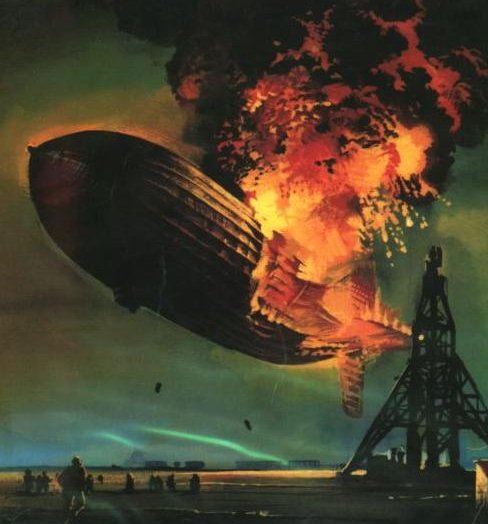
(Illustration found here).

Maybe we should take the plunge already and go Eurozone — $10-a-gallon gas would force stiff-necked US peoples to alter lifestyles and move on before the whole thing becomes reality.
New fuel for old vehicles — there’s about 240.5 million cars and light trucks cruising US highways and the average age of those vehicles rose to 10.8 years last year from 10.4 in the year before, due mainly to bad times in Detroit and the economy.
Apparently from indications beyond a recession, US peoples have been easing off the private vehicle for awhile now.
Via AlterNet  two years ago:

Among the trends that are keeping sales well below the annual figure of 15-17 million that prevailed from 1994 through 2007 are market saturation, ongoing urbanization, economic uncertainty, oil insecurity, rising gasoline prices, frustration with traffic congestion, mounting concerns about climate change, and a declining interest in cars among young people.
Market saturation may be the dominant contributor to the peaking of the U.S. fleet.
The United States now has 246 million registered motor vehicles and 209 million licensed drivers — nearly 5 vehicles for every 4 drivers.

Kids and cars:

Perhaps the most fundamental social trend affecting the future of the automobile is the declining interest in cars among young people.
For those who grew up a half-century ago in a country that was still heavily rural, getting a driver’s license and a car or a pickup was a rite of passage.
Getting other teenagers into a car and driving around was a popular pastime.
In contrast, many of today’s young people living in a more urban society learn to live without cars.
They socialize on the Internet and on smart phones, not in cars.
Many do not even bother to get a driver’s license.
This helps explain why, despite the largest U.S. teenage population ever, the number of teenagers with licenses, which peaked at 12 million in 1978, is now under 10 million.
If this trend continues, the number of potential young car-buyers will continue to decline.

Plus these kids now are also faced with an incredible financial burden, not only with a humongous student-loan debt, but a bleak employment picture (despite Friday’s numbers) — unless one is an oil/gas person (corporations are people).

Maybe a bit of inequality right there: Exxon’s $41.1 billion in 2011 profit translates into nearly $5 million in profit every hour, or more than $1,300 every second. The annual profit comes near the record revenues of $46.23 billion in 2008…Between 2008-2010, Exxon Mobil registered an average 17.6 percent federal effective corporate tax rate, while the average American paid a higher rate of 20.4 percent.

Maybe venture into the ugly-oddness of fuel:

Gasoline prices are higher at the beginning of 2012 than at the beginning of any previous year ever — even at the beginning of 2008, a year when the national average for a gallon of regular unleaded gasoline reached a record $4.114 on July 7.
In its Daily Fuel Gauge Report, AAA Texas noted Friday a national average of $3.467 for a gallon of regular unleaded gasoline — up from $3.455 a day ago, $3.389 a week ago, $3.288 a month ago and $3.116 a year ago.
“We’re seeing the highest gasoline prices that we’ve seen,” Sarah Schimmer of AAA Texas said Friday.
“2011 was a record year, and in 2012 we’re definitely seeing higher prices.”

And all this for mobility, not only just for driving my Jeep around town, but oil/gas framed within the way-big picture of how the existence of an entire civilization depends on the black, bubbly shit — no way yesteryear can continue into the nowadays.
In reality, peak oil is actually the end of easy oil, low prices at the pump and so forth, and this peak supposedly occurred worldwide in about 2005 — so we’re already on the downside.
One interesting look at future possibilities comes from “Fleeing Vesuvius: Overcoming the Risks of Economic and Environmental Collapse,” a collection of essays from economists, environmental scientists, a couple of architects and even a corporate lawyer on the premise of how close we are to being totally f*cked.
From a review by Stuart Jeanne Bramhall of Fleeing Vesuvius and posted Friday at DissidentVoice:

The title refers to the volcano that destroyed Pompeii in 79 AD, specifically the large number of residents who failed to save themselves, despite weeks of earthquakes, gaseous clouds and other obvious signs that an eruption was imminent.
For more than a decade, a growing body of evidence suggests that the planet is on the verge of economic and ecological collapse.
Yet the vast majority of us do absolutely nothing to prepare for the stark conditions ahead.

All (the essay writers) are in basic agreement around the book’s central premise: the industrialized world needs to urgently downsize its energy use, both to stave off catastrophic climate change and to conserve dwindling fossil fuels.
In his Introduction, “Where We Went Wrong,” the late Irish economist Richard Douthwaite points out that one barrel of oil provides the equivalent labor of a man working forty hours a week for twelve years.
He goes on to stress that before the advent of cheap fossil fuels, capitalism was impossible — an economy relying on human labor and animal power is too inefficient to support it.
By definition capitalism depends on capital accumulation, the production of an economic surplus that can be reinvested in new capital (property and machines) to expand production even further.
Producing a surplus of this size only became possible because of the vast amount of cheap (practically free) work performed by fossil fuel energy.

And Ms Bramhall also reveals a brightness from the essays, not all doom-n-gloom: The last five sections of the book focus on solutions, with inspiring examples of new approaches to land use, agriculture and industrial design from individuals, groups and communities who have begun the transition to a less energy-intensive lifestyle.
Inspiration needs to have already been popped — too much pie-in-the-sky without actual political reality.
One updated  sample chapter of Fleeing Vesuvius can be found at The Oil Drum.
And another review of the essay collection can be found here.

A major snag in the optimism — the above-mentioned political reality.
So says Kumi Naidoo, head of the environmental group Greenpeace, who spoke Friday at the big-wig, pow-wow Munich Security Conference, and chimed a loud alarm.
Via Raw Story:

“The moment of history we are in can be described as a boiling point or a perfect storm,” he told the assembled gathering of world leaders, ministers, top brass and defence policy experts at the annual Munich gathering.
“We are seeing a convergence of multiple crises happening at the same time. A food crisis, climate crisis, poverty crisis … and then of course the financial crisis and a demographic crisis and a global governance democratic crisis,” he added.
“The bottom line is that too many of our leaders … are sleepwalking us into a crisis of epic proportion,” he claimed.

One of those doing the sleepwalking is US Secretary of State Hillary Clinton, who’s also in Munich, Germany, this weekend for the conference, but her schedule has no room for end-of-life-as-we-know-it antics fostered by environmental activists — Clinton will most-likely reminisce about “…what a key partner Europe is in the global security, economic, democracy promotion agenda that we have.”

Just wake ‘em later.

Harsh Realities vs ‘Optimism Bias’

Filed Under Cloud gazing, Environment, Madness | Leave a Comment

Meanwhile, beyond the SOPA blackout/back-peddle, and the nasty, bitch-slapping noise in South Carolina from GOP presidential nit-twits vying for  richest asshole, there’s the non-stop horror of climate change.
Climate what?

Last year, despite all kinds of horrible weather/climate shit, the news media has way-down-played climate change as anything more than a storm in passing — coverage for the common folk has just “fell off the map.”

(Illustration found here).

Up here along California’s northern coast this early Thursday rain is beating down, bolstered by a pretty-good wind — most likely an off-shoot from that big storm blasting the northwest (via Wunderblog): Field reports late Tuesday already indicated lots of natural and human triggered slides ranging from about 1 to 3 feet deep. Avalanche warnings already in effect for high danger…and with warming…further winds and additional heavy to very heavy snow…some quite dense…avalanche activity should become larger and more severe on Wednesday.
And what about that white stuff in Algeria, as …an unusual sight in the North African country, with scenes of palm trees surrounded by snow.
What, me worry?

You betcha.

One terrible aspect with the science on climate change is the re-occurring situation of shit being worse than originally proposed, as this little snippet from two years ago: We now know that, without effective action, climate change is going to be larger and more difficult to deal with than we thought.
And now, a new one, bringing extreme weather events into focus with climate and the speed of change, all done by math nerds.
From PhysOrg.com (h/t The Oil Drum):

Swiss mathematicians have shown that the risk of extreme climate events is largely underestimated.
They are developing a model for better understanding the impact of climate change.

For several years now, the scientists have noted that the increase in extreme events associated with climate change appears to be having much more of an impact on society than the increase in mean temperatures.
Natural disasters are accompanied by a significant human and economic cost.
In the case of exceptional heat waves, the mathematicians found that, based on global warming predictions, the probability of an event at least as severe as the 2003 heat wave will be six times greater in 2050 than it was in 2003.

This doesn’t seem to matter, however, if the MSM keeps pushing climate change away from A1 and onto the society pages without much ado, leaving people to fend for their mental selves — a horror story in itself.
The standard thought from the standard brain: ‘Somebody will figure out something, they always do.’
This line I’ve heard from countless folks, some more intelligent than others, but all have some kind of gray matter stored in their skull caps.
Since climate change is such a huge, way-out-there subject, a thing one “believes” (like it’s a religion or something), and not like a ball-bat up-side the head, people tend to skip away from really getting down and dirty with our one and only environment.

People seem to have a need to feel better than the reality — one has to have hope in order to work through tomorrow, right?
In view of this, a lot of problems that don’t literally face us each minute/hour/day are pushed aside and placed in a giant petri dish called the “optimism bias” — also known  as the “positivity” illusion.
A paradox of that ain’t gonna happen to me.

From a discussion at CNN Health:

“It is a natural human inclination to see our situation and our future through rose-colored glasses,” says David Ropeik, author of “How Risky Is It, Really?: Why Our Fears Don’t Always Match the Facts.”
“We tend to see our prospects as being far better than they may actually be — and particularly when compared to the next guy.
This optimism lets us deal with hardship and take chances in life.”

Most people are mildly optimistic and that’s a good thing, observes Dr. Tali Sharot, author of “The Optimism Bias: A Tour of the Irrationally Positive Mind.”
“The 20 percent or so of people who do not have an optimism bias are clinically depressed.
In fact, when things go really bad, people become more optimistic, not less, because that’s when we need it most.”
According to Sharot, there is even more reason to celebrate our inclination toward hope.
“Optimism is better for your mental health – it eases your mind and actually lowers your stress.”

At the end of the day, “the bias toward optimism is helping you cope to some degree, but it can also be deceiving you into ignoring a danger,” notes Ropeik.
“To the extent we are less worried about something than we should be, that clearly raises our risk.
If optimism bias is letting us deny that our stressed lives are bad for our health, that harm far outweighs the measure of relief optimism can bring.
“Two things to keep in mind: you want to be aware of the risk and you want to be clear about the psychology behind the way you read and assess the risk.
When you know both, you will be better equipped to take action.”

Unless it’s done too late — optimism without reality won’t travel far.

Pump Up

Filed Under Cloud gazing, Everything | 1 Comment

On Saturday, I put another $20 worth of gas in the old Jeep, the pump price still at $3.83 a gallon for regular here on California’s northern coast.
Meanwhile, with all the frantic activity amongst various warships in the Strait of Hormuz, the US average of gas at the pump was up 7 cents in the last week to $3.38 a gallon — 29 cents a gallon more than 2010.

Oil and politics really don’t mix, especially with the current GOP and its love of the wealthy (of self, really), but because of  ‘problems‘ with Iran the price for normal, regular US peoples is expected to top $4 a gallon in 2012, maybe $5 a gallon in some places (California?) — anyway/anyhow it ain’t going no where, but up.

(Illustration found here).

On Friday, from liveoilprices: In London, Brent crude oil futures for February 2012 delivery was trading at $112.17 a barrel, 07.05 GMT today on the ICE Futures Exchange.
Also last Friday, WTI: US Light crude oil futures for February 2012 delivery was trading at $100.02 a barrel, 07.20 GMT this morning in electronic trading on the NYMEX.

Although US peoples shudder at the high pump prices, the cost right now is not at a ‘break even’ point for most American households — the pump don’t make or break the old budget, yet — but with the oil-producing countries, timing is everything.
From Fareed Zakaria at CNN:

I saw some striking numbers this week: Look at the “break-even” costs for the world’s top oil producers.
That is the minimum price at which these countries need to sell oil so that they can balance their budgets.
Russia now needs oil at $110 a barrel to manage its finances.
For Iraq, the number is $100.
Even Saudi Arabia now needs oil to trade around $80 a barrel just to balance its budgets.
The numbers are also high for Algeria, Qatar, and Oman.
Only a decade ago Saudi Arabia was able to balance its budget with oil prices averaging around $25 a barrel.
So now it is in these countries’ interest to keep oil prices high, which they do by curtailing supply in one way or the other.
This is perhaps the most lasting impact of the year of global protest: High oil prices.
So, the bottom line is an oil crash seems unlikely.
Even though the engines of global growth are sputtering, be prepared for a period of expensive commutes.
Maybe it’s time to trade in your Escalade for a Prius.

Most-likely too late to do much of anything except drive less.

Fog of Truth — ‘Bugsplat’

Filed Under Bullshit, War & Politics | Leave a Comment

As the new year grinds on, politics has taken the edge off the nearly unnoticed pullout of US troops from Iraq, ending a segment in one of the most-horrible of episodes.
And the most lied about military adventure in US history.

“In making the case for war, the Administration repeatedly presented intelligence as fact when in reality it was unsubstantiated, contradicted, or even non-existent.
As a result, the American people were led to believe that the threat from Iraq was much greater than actually existed.”
– US Senate Select Committee on Intelligence, June 5, 2008

Despite the obvious, none of George Jr.’s entourage has ever even been threatened with criminal prosecution.

(Illustration found here).

In a new view of the Iraqi horror is the word, “bugsplat:” One definition is a software for scanning your computer for registry errors; another is the lack of humanity in warfare.
The US military’s invasion was a nasty example of the latter.
In fact, ‘Bugsplat‘ was the name of a computer program in 2003 used to determine collateral damage inflicted by American bombs.
HaHaHaHa — bugsplat, anyone/anything squashed on the US windshield.

Robert Koehler took a look at this line of bullshit yesterday morning at the Baltimore Sun:

“But even when they’re not targeting civilians, which is probably most of the time, they end up killing massive numbers of civilians,” journalist Allan Nairn told Amy Goodman in a “Democracy Now!” interview last year.
“The Pentagon has a word for that, too,” he went on.
“They call it ‘bugsplat.’
In the opening days of the invasion of Iraq, they ran computer programs, and they called the program the Bugsplat program, estimating how many civilians they would kill with a given bombing raid.
On the opening day, the printouts presented to General Tommy Franks indicated that 22 of the projected bombing attacks on Iraq would produce what they defined as heavy bugsplat — that is, more than 30 civilian deaths per raid.
Franks said, ‘Go ahead. We’re doing all 22.’”
And this is the foundation of our national security.

Koehler concludes:

Project Bugsplat is the name of every war, at least from the planners’ point of view.
A winnable war is waged from above, invisibly, with godlike impunity.
Such wars, especially in today’s political order, cannot be effectively opposed with acts of equally brutal counterforce; they can only be prolonged.
“Bugsplat” is a term of ultimate disrespect and indifference, and it begins with a state of mind.
The global Occupy movement, with its humane and nonviolent core certainty, is tipping the balance. Finally it comes down to this: Occupy consciousness.

Without such, death comes by indifference.

This indifference can be applied to the US MSM — news organizations who have turned its eyes and ears away from exposing a rot now fully grown within the American soul.
Watch and listen here to the late Nobel Prize-winning playwright Harold Pinter’s emotional outrage at the Iraqi war — he expresses horror at his own country (the UK) for being involved with such a crime.
And despite the US supposedly being gone, the blood still flows – from Bloomberg on a new report from London-based Iraq Body Count:

“The rate of Iraqi civilian deaths caused by U.S.-led coalition forces has declined steadily from 2009, while the rate caused by Iraqi state forces has increased,” the group said in an e-mailed news release.
Recent trends point to a “persistent low-level conflict in Iraq that will continue to kill civilians at a similar rate for years to come,” Iraq Body Count said.
“Time will tell whether the withdrawal of U.S. forces will have an effect on casualty levels,” the group said.

The US media, however, has been most quiet about any bad vibes coming off a war that tore apart the world’s thin fabric and left a country in a position beyond misery – a verbal snapshot of one Iraqi woman seems to sum it up: “Today is better than tomorrow.”

And tomorrow is the Iowa caucuses where the war party starts its machine rolling — horror of ugly horrors, though Newt Gingrich whined and took a bugsplat: “No, I feel ‘Romney-boated.”

The dogs of war fight amongst themselves — bug splatting everybody.

Watchers/Listeners

Filed Under Bullshit, Orwellian, Technology, War & Politics | Leave a Comment

“Even the Catholic Church of the Middle Ages was tolerant by modern standards.
Part of the reason for this was that in the past no government had the power to keep its citizens under constant surveillance.
The invention of print, however, made it easier to manipulate public opinion, and the film and the radio carried the process further.
With the development of television, and the technical advance which made it possible to receive and transmit simultaneously on the same instrument, private life came to an end.”
– George Orwell, 1984 (quote found here)


(Illustration found here).

WikiLeaks founder Julian Assange spoke Monday during a panel discussion at London’s Bureau of Investigative Journalism — he was announcing another WikiLeaks dump, this time the files concern private surveillance companies who have worked with various world governments to track whoever via monitoring software integrated into electronic devices.

“Who here has a BlackBerry?
Who here uses Gmail?
Well you are all screwed!” Assange exclaimed.
“The reality is intelligence contractors are selling right to countries around the world mass surveillance systems for all of those products.”

Meanwhile, just yesterday, Sen. Al Franken demanded an explanation on how the so-called ‘Carrier IQ,’ installed all new Android smartphones, really works — this hidden software  is supposedly meant to help mobile carriers monitor and diagnose problems with their devices, but in reality may transmit personal information.
In a letter to Carrier IQ President and CEO Larry Lenhart, Franken wanted more information on the capabilities of the device.
Via Raw Story:

“I am very concerned by recent reports that your company’s software—pre-installed on smartphones used by millions of Americans—is logging and may be transmitting extraordinarily sensitive information from consumers’ phones…
“I understand the need to provide usage and diagnostic information to carriers,” he continued.
“I also understand that carriers can modify Carrier IQ’s software.
But it appears that Carrier IQ’s software captures a broad swath of extremely sensitive information from users that would appear to have nothing to do with diagnostics—including who they are calling, the contents of the texts they are receiving, the contents of their searches, and the websites they visit.”
“These actions may violate federal privacy laws, including the Electronic Communications Privacy Act and the Computer Fraud and Abuse Act,” Franken warned.
“This is potentially a very serious matter.”

Serious indeed.
Franken was responding to a claim from Trevor Eckhart, a 25-year-old electronics expert, that the Carrier IQ operation can be used in nefarious ways.
On Eckhart’s blog he explains how this works, and despite a lot of geek shit (non-sensible to me), he concludes:

The fact that it’s embedded into the shipped device raises very serious security and privacy concerns.

The CIQ application is embedded so deeply in the device that it can’t be fully removed without rebuilding the phone from source code.
This is only possible for a user with advanced skills and a FULLY unlocked device.

If a bad actor discovered a vulnerability or used malware, he could potentially exploit that opportunity to become a “CIQ operator,” leaving many users helpless against the extensive collection and misuse of their own information and no way to stop it.
With so much moving code across the operating system, I would say the chances of malware looking here isn’t that far-fetched.

Of course, Carrier IQ got pissed at Eckhart, fired off a cease-and-desist letter and demanded he issue an apology for calling its software a”rootkit,” but back-tracked when Electronic Frontier Foundation became involved.
The EFF is an US-based non-profit digital rights advocacy and legal organization.
From CNET News:

Just days later, Carrier IQ did an about face after the Electronic Frontier Foundation responded to its cease-and-desist letter, saying that Eckhart’s comments and research are protected under the Copyright Act’s fair use provision.
“Our action was misguided and we are deeply sorry for any concern or trouble that our letter may have caused Mr. Eckhart,” the company said in response to the EFF’s letter.
“We sincerely appreciate and respect EFF’s work on his behalf, and share their commitment to protecting free speech in a rapidly changing technological world.”

In dumping the surveillance logs, termed “The Spy Files,” WikiLeaks on its Web site explains:

International surveillance companies are based in the more technologically sophisticated countries, and they sell their technology on to every country of the world.
This industry is, in practice, unregulated.
Intelligence agencies, military forces and police authorities are able to silently, and on mass, and secretly intercept calls and take over computers without the help or knowledge of the telecommunication providers.
Users’ physical location can be tracked if they are carrying a mobile phone, even if it is only on stand by.

When citizens overthrew the dictatorships in Egypt and Libya this year, they uncovered listening rooms where devices from Gamma corporation of the UK, Amesys of France, VASTech of South Africa and ZTE Corp of China monitored their every move online and on the phone.

The CIA officials have bought software that allows them to match phone signals and voice prints instantly and pinpoint the specific identity and location of individuals.
Intelligence Integration Systems, Inc., based in Massachusetts — sells a “location-based analytics” software called Geospatial Toolkit for this purpose.
Another Massachusetts company named Netezza, which bought a copy of the software, allegedly reverse engineered the code and sold a hacked version to the Central Intelligence Agency for use in remotely piloted drone aircraft.

And this is beyond just the old ‘looking over you shoulder‘ routine — be aware and be watchful, they are.

keep looking »